Amit Kapoor
 Varicose veins in TCM, Varicose, Varicose veins
 0 comment
 31 Dec, 2025
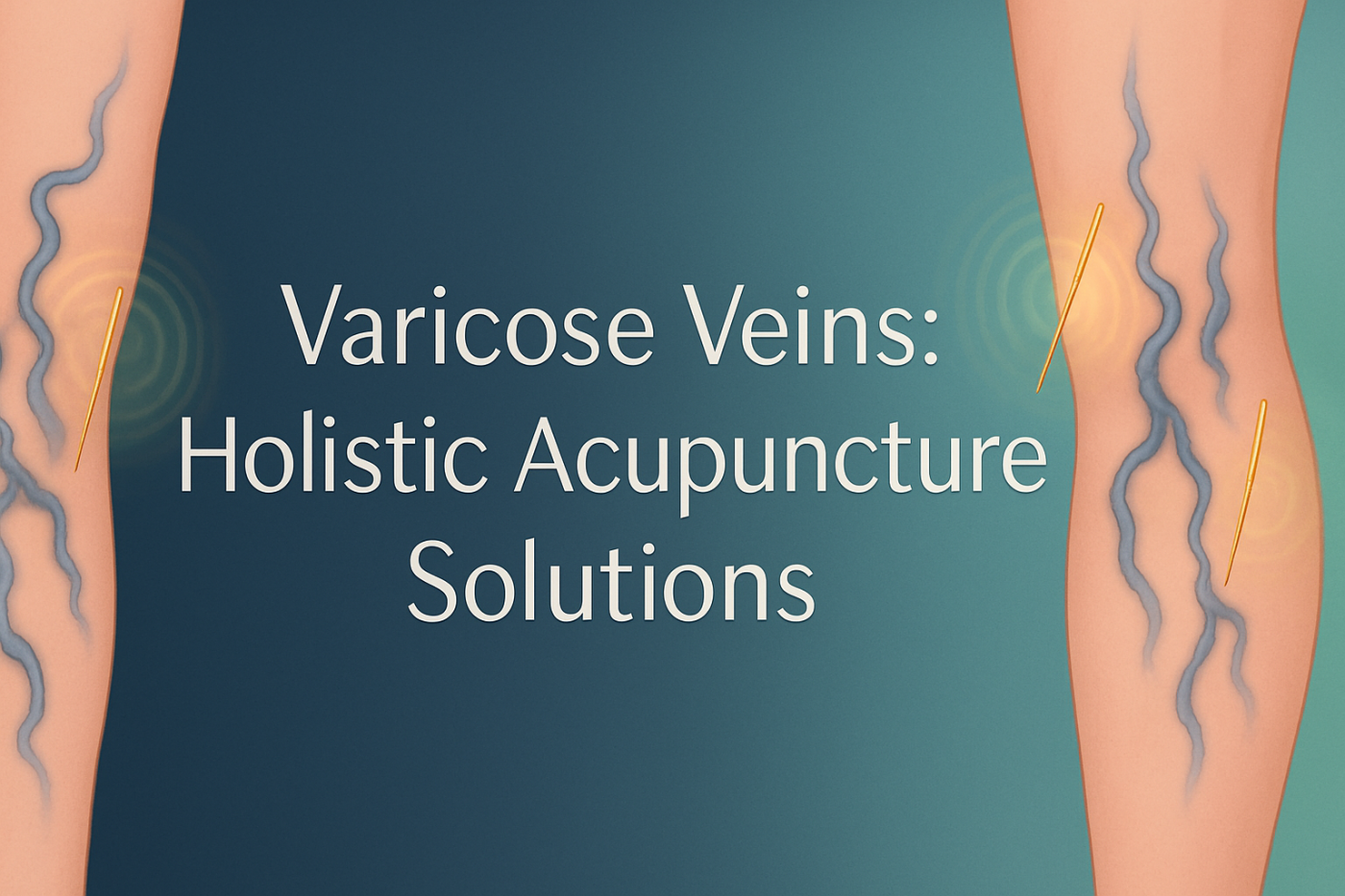
Varicose veins in Traditional Chinese Medicine (TCM) are understood as a manifestation of Blood stasis and impaired flow in the leg channels, especially the Foot Taiyang Bladder and Foot Yangming Stomach, often compounded by Spleen Qi deficiency and Dampness. UB 58 (Feiyang), as the Luo-Connecting point of the Bladder channel that “soars upward” and harmonizes upper–lower circulation, offers an elegant distal strategy to influence venous return in the lower limbs and is a valuable adjunct point when treating varicose veins within a channel-based and systemic TCM framework.
In TCM, varicose veins of the lower extremities are usually categorized under Blood stasis, often mixed with Qi stagnation, Dampness, and sometimes Heat, leading to engorged, tortuous superficial veins, pain, heaviness, edema, and skin changes. Constitutional Spleen and Kidney deficiencies weaken the transformation and transportation of fluids and the holding function of Qi, predisposing to chronic venous insufficiency patterns in the legs.
From a channel perspective, the Foot Taiyang Bladder, Foot Yangming Stomach, Foot Shaoyin Kidney, and Foot Taiyin Spleen channels all traverse the lower limbs, so stasis, Dampness, and deficiency on these pathways can manifest as varicosities along their course. In contrast, Western medicine views varicose veins primarily as structural failure of venous valves and vein wall weakness, causing reflux and pooling, whereas TCM emphasizes functional imbalance, Qi–Blood dynamics, and organ/channel disharmony that precede and accompany these structural changes.
Untreated varicose veins can progress from cosmetic concerns to chronic pain, edema, skin hyperpigmentation, eczema, and even venous ulcers, significantly impairing quality of life. Early TCM intervention aims to move Blood, resolve stasis, support Qi, and prevent progression to complications such as variceal ulceration and recurrent inflammation, complementing or reducing the need for invasive procedures.
Holistically, addressing varicose veins in TCM also improves systemic circulation, reduces leg fatigue, and supports Spleen–Kidney functions, thereby benefiting overall vitality and mobility in daily life.
UB 58 (Feiyang, “Soaring Upwards”) is the Luo-Connecting point of the Foot Taiyang Bladder channel. It lies on the lower leg, approximately 7 cun directly superior to UB 60 (Kunlun) and about 1 cun inferior and lateral to UB 57 (Chengshan), in the gastrocnemius region.
Classically, Feiyang “balances the upper and lower,” expels Wind-Damp from the Taiyang channel, stimulates the meridian, and relieves pain. It is widely indicated for lumbar and leg pain, weakness or difficulty standing, sciatica, and hemorrhoids, reflecting its ability to influence venous and hemorrhoidal plexuses via the Bladder channel trajectory around the sacrum and anus.
Luo-Connecting and collateral circulation
Luo-Connecting points link the main meridian with its paired channel and collaterals, making UB 58 particularly suited to influencing collateral circulation and smaller vessels relevant to varicose veins.
By stimulating the Bladder Luo vessel, UB 58 can help “unblock” collaterals in the lower limb pathway, encouraging movement of Blood and fluids and easing venous congestion in varicose patterns.
Balancing upper and lower
Feiyang’s classical function of “balancing the upper and lower” makes it ideal when leg varicosities coexist with upper body symptoms such as head heat, dizziness, or headache, often due to Qi and Blood being trapped below with relative excess above.
In such patients, UB 58 can guide turbid, stagnant Qi downward and promote smooth ascent of clear Yang, harmonizing pressure gradients that contribute to venous pooling in the legs.
Channel-based treatment of venous disorders
UB 58 is a key distal point on the same Taiyang pathway frequently employed for lumbar pain, sciatica, and leg weakness, paralleling its potential use for venous insufficiency signs like heaviness, aching, and difficulty standing.
Its known indication for hemorrhoids—another venous plexus disorder—supports its application for varicose veins, as both share mechanisms of local stagnation, Damp-Heat, and impaired vessel tone along the Bladder pathway.
Synergy with other leg points
Clinical acupuncture protocols for lower extremity varicose veins often include points such as BL 57 (Chengshan), BL 40 (Weizhong), SP 6, SP 10, and ST 36 to move Blood and improve lower limb circulation.
Adding UB 58 creates a powerful Taiyang pair with BL 57 (local) while also engaging Luo dynamics, giving both local and distal regulation of venous return, especially in segmental varicosities along the posterior leg.
Systemic regulatory role
By stimulating the Bladder channel, which is closely associated with Kidney function in TCM, UB 58 can be integrated into Yuan–Luo combinations (e.g., with KD 3) to address root Kidney deficiency when chronic venous insufficiency is linked to weak lower back, cold legs, and fatigue.
This dual root–branch approach allows UB 58 to be more than a symptomatic point; it becomes part of a systemic strategy to strengthen Qi, warm Yang, and stabilize the lower body against gravitational pooling.
Acupuncture for varicose veins aims to:
Move Qi and Blood and resolve stasis in affected channels.
Strengthen Spleen Qi to transform Dampness and support vessel integrity.
Warm and tonify Kidney and Yang where there is cold, edema, and chronicity.
Typical diagnostic patterns include:
Blood stasis with Qi stagnation (localized pain, purple veins, fixed stabbing pain).
Damp-Heat in the lower burner (hot, red, inflamed veins and skin).
Spleen Qi deficiency with Dampness (heavy legs, edema, fatigue).
Kidney Yang deficiency (cold, weak legs, chronic venous insufficiency).
During a session, the practitioner palpates channel pathways, observes tongue and pulse (often purple or with stasis spots, swollen with a greasy coat, or pale with teeth marks), and inspects the distribution, color, and temperature of the varicosities to differentiate pattern and channel involvement.
In practice, UB 58 is often:
Needled perpendicularly or obliquely 1–1.5 cun, with mild reinforcing-reducing manipulation to achieve a distending or traveling sensation along the Bladder channel.
Paired with local points near the varicosities or along the Bladder and Stomach channels (e.g., BL 40, BL 57, SP 10, SP 6, ST 36) to both clear the “jam” locally and regulate circulation distally.
For Blood stasis with Damp patterns, UB 58 can be combined with SP 10 and SP 6 to move Blood and drain Dampness; for more deficiency-type chronic cases, it may be paired with KD 3 or Ren 6 to tonify Qi and Yang while still mobilizing the collaterals.
When integrated into a comprehensive protocol, UB 58 can be useful in patients presenting with:
Aching, heavy legs worse with standing and improved by elevation.
Visible, tortuous veins along the posterior leg, with or without edema.
Associated low back pain, sciatica, or hamstring tightness along the Bladder channel.
Hemorrhoids coexisting with leg varicosities, suggesting systemic venous congestion along the Bladder and related collaterals.
More advanced complications such as variceal ulcers have also been approached with acupuncture using peri-ulcerous local needling and limb Luo-group points, though such cases require careful integration with biomedical management.
Below is an example-oriented table of commonly selected points and techniques for varicose vein patterns, highlighting where UB 58 fits conceptually:
UB 58 (Feiyang), a Luo-Connecting point on the Bladder channel, balances the upper and lower body, stimulates the Taiyang collaterals, and relieves leg and lumbar pain. In varicose vein patterns, it is used as a distal point to regulate venous return, reduce heaviness and sciatica, and help with hemorrhoids, especially for posterior leg varicosities.
UB 57 (Chengshan) on the Bladder channel relaxes the calf and moves Blood along the Bladder pathway. Clinically it is selected as a local point near posterior leg varices and calf cramps and is often paired with UB 58 for added effect.
UB 40 (Weizhong), the He-Sea point of the Bladder channel, cools the Blood, benefits the lower back and knees, and moves Blood in the lower limb. It is often used for varicose veins behind the knee, leg pain, and venous congestion in the popliteal area.
SP 10 (Xuehai) on the Spleen channel invigorates Blood, dispels stasis, and cools the Blood. It is indicated for purple, painful varicosities with clear Blood stasis signs and for skin changes around the affected veins.
SP 6 (Sanyinjiao), the meeting point of the Spleen, Liver, and Kidney channels, strengthens Spleen, resolves Dampness, and nourishes Blood. It is useful for heaviness, edema, and mixed Qi–Blood–Damp issues in the lower legs associated with varicose veins.
ST 36 (Zusanli) on the Stomach channel tonifies Qi and Blood and supports circulation in the legs. It is commonly added to support lower limb circulation and address Spleen–Stomach Qi deficiency underlying varicose vein presentations.
LV 3 (Taichong) on the Liver channel moves Liver Qi and harmonizes Blood flow. It is chosen when varicose veins are accompanied by Qi stagnation features such as irritability and distending leg discomfort.
Fire needling or warm needling techniques warm the channels, disperse Cold, and move Blood. They are reserved for resistant, cold-type varicose patterns and for some cases of associated variceal ulceration, always applied cautiously and alongside biomedical care.
These are illustrative and must always be adapted to each patient’s pattern, constitution, and safety considerations (e.g., avoiding direct needling into distended veins).
For new patients with varicose veins seeking acupuncture and specifically UB 58 as part of treatment:
Expect a thorough TCM intake, including questions on leg symptoms, lifestyle, digestion, menstrual history (if relevant), and systemic signs, followed by tongue and pulse examination.
Treatment often combines distal points like UB 58 with other systemic and local points, typically requiring a series of sessions (e.g., 1–3 per week for several weeks) to see meaningful changes in pain, heaviness, and appearance.
Patients are usually advised to combine acupuncture with lifestyle measures such as appropriate exercise, avoiding prolonged standing, leg elevation, and in some cases compression therapy, to optimize venous return and support the therapeutic effects of points like UB 58.


Amit Kapoor
0 comment